
August 11, 2026
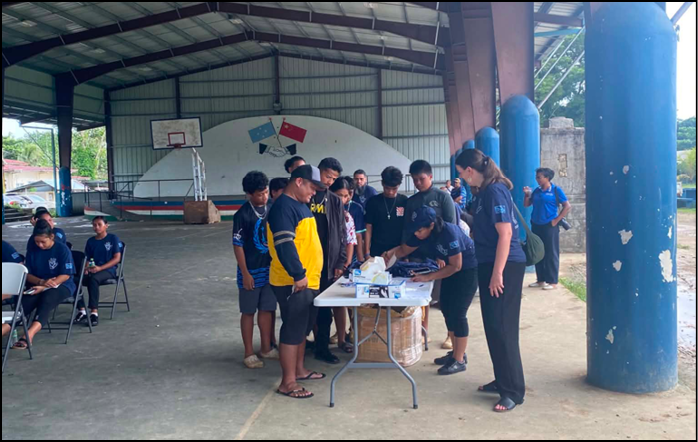
Pohnpei – The International Organization for Migration (IOM), together with the Federated States of Micronesia (FSM) Anti-Human Trafficking Services Division (AHTSD) and the U.S. Embassy Kolonia, joined community members in Pohnpei to mark World Day Against Trafficking in Persons with an awareness session and community clean-up activity on 30 July 2026.
Observed globally each year on 30 July, World Day Against Trafficking in Persons raises awareness of human trafficking and the need to protect and support victims. This year’s theme, “Trapped Behind the Scam,” draws attention to trafficking through online scam operations, an increasingly digital and transnational crime affecting communities around the world.
Supported by the U.S. Government, the event in Kolonia brought together students, volunteers, government partners and community members for an awareness-raising session led by Alik Talley of the AHTSD on online safety, the warning signs of trafficking, and how young people and families can protect themselves from deceptive recruitment, false job offers and exploitation in their day-to-day use of social media and other digital platforms.
Assistant Secretary Lino Amor of the FSM Anti-Human Trafficking Services Division opened the programme, followed by remarks from IOM North Pacific Chief of Mission Ewa Naqvi and Patrick Reidy, Chargé d’Affaires of the U.S. Embassy Kolonia.
“As the Pacific becomes more mobile and digitally connected, FSM citizens seeking opportunities abroad should be aware of, and protect themselves against, recruiters that can reach them directly through social media and other online platforms,” said Ms. Naqvi, during the event.
Globally, IOM has warned that hundreds of thousands of people have been trafficked by criminal networks and forced to participate in online scams. Victims are often deceived by fake job advertisements promising legitimate work abroad, only to be trapped, coerced and forced into criminal activity.
IOM’s global message for this year’s campaign underscores that people forced to commit crimes inside scam centres are victims of trafficking and should be protected, not punished. Preventing this crime requires stronger awareness, early identification, survivor-centred assistance and cooperation across communities, governments and borders.
Following the awareness session, participants joined a community clean-up activity around the Kolonia Town multipurpose gym. Similar awareness and clean-up events were also held in Chuuk, Kosrae and Yap led by the respective Anti-Human Trafficking Division Offices.
Leave a Reply