
Augusts 11, 2026
Walung, Kosrae — Three rainwater catchment systems, supported by the United States Government and implemented by the International Organization for Migration (IOM), were officially handed over to the Walung community leaders on 31 July 2026 to help improve access to water for communities in Walung, Kosrae.
Installed under the Inclusive Mitigation and Preparedness in Action (IMPACT) project, the systems are strategically located in Koasr, Panyacah and Leahp villages. Each site includes two 1,500-gallon tanks, bringing the total water storage capacity to 9,000 gallons. The catchments are designed to support household water needs, providing communities with a more reliable water source during periods of low rainfall.
“For communities such as Walung, practical investments in water security can make a real difference during dry periods,” said Ewa Naqvi, IOM Chief of Mission for the Coordinating Office for the North Pacific.
“Through the support of the United States Government and close collaboration with local leaders, IOM is helping communities strengthen preparedness and better withstand the impacts of climate-related hazards,” she added.
The support comes at a critical time as communities across the Pacific prepare for the impacts of El Niño, which can increase pressure on water availability, food production and household resilience. In Walung, where geographic isolation, limited public infrastructure and reliance on local natural water sources make drought conditions especially challenging, the new catchments will help families reduce travel time to distant wells, store water closer to their homes, and maintain access to water for essential household use and homestead gardening during dry periods.
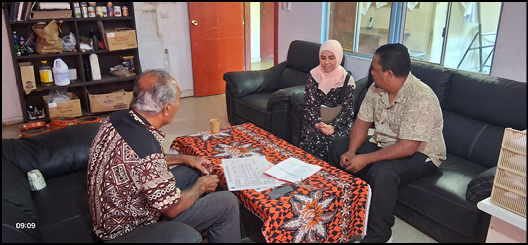
During the handover, Walung Mayor Jacobz George and community members welcomed the installations, noting that the systems were placed in areas that are accessible to households and are already helping the community feel more water secure. Community members also noted that they have reduced dependence on their existing water sources including nearby streams and a groundwater well located far from many homes.
To support the sustainable use of the systems, IOM previously provided training to community members on basic maintenance and upkeep. Additional improvements, including solar power options and access to spare parts, are being considered to help reduce disruptions caused by power cuts and support long-term community management of the catchments.
Leave a Reply