
August 11, 2026
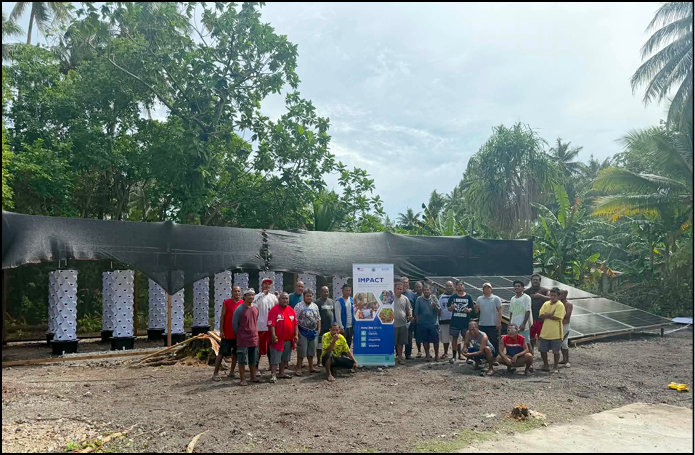
Pohnpei — The United States Government, with implementation support from the International Organization for Migration (IOM), has installed solar-powered aeroponic towers in Pingelap, Pohnpei, to help improve food security and community resilience on the remote atoll.
As a low-lying island, Pingelap faces a high risk of typhoons and droughts, both of which contribute to putting stress on food sources.
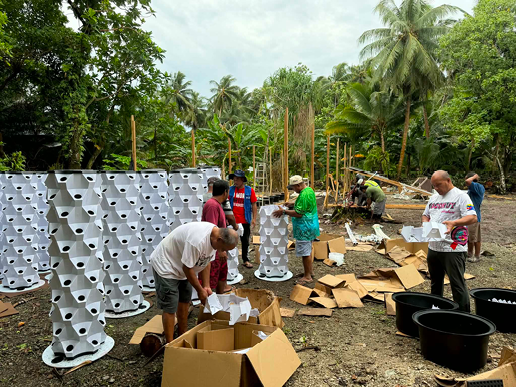
The initiative, implemented under the Inclusive Mitigation and Preparedness in Action (IMPACT) project, includes the supply and installation of 20 solar-powered aeroponic tower systems, water reservoir and pumping infrastructure, solar control equipment, and protective shade structures. Based on consultations with the community, the U.S. Government also provided seedlings for a variety of produce, including cucumber, sweet corn, bell pepper, Chinese cabbage and other vegetables. These systems are designed to support local food production and reduce the community’s vulnerability to disruptions caused by droughts, storms and other extreme weather events.
During a field visit in July 2026, IOM conducted training sessions with community representatives on system functionality, basic troubleshooting, maintenance procedures, routine cleaning and preventive maintenance and operational responsibilities to help ensure the sustainable use of the new equipment.
“For remote island communities like Pingelap, resilience begins with practical solutions that respond to local needs,” said Ewa Naqvi, IOM Chief of Mission for the Coordination Office for the North Pacific. “Through this partnership with the United States Government and local stakeholders, IOM is helping communities strengthen food security, improve preparedness and better withstand the impacts of climate-related hazards.”
The aeroponic towers are especially important for island communities like Pingelap, where remoteness drought and extreme weather can put food systems at risk. With El Niño declared across the Pacific, investing in local food production facilities is vital to help communities prepare, reduce risk and recover faster from climate-related shocks.
Leave a Reply