
October 8, 2026
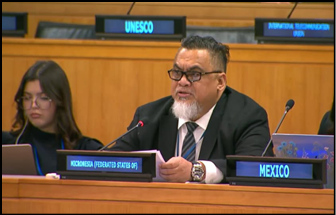
NEW YORK — The Federated States of Micronesia has called for changes to international development financing, arguing that income-based measures alone fail to reflect the climate risks, geographic isolation and economic vulnerabilities facing small island nations.
In an October 8 statement to the United Nations General Assembly’s Second Committee, the FSM delegation urged international financial institutions to better account for those challenges and expand access to concessional and climate finance.
The statement, released by the FSM Permanent Mission to the UN, addressed financing sustainable development in a changing global economy. Micronesia aligned itself with the position of the Alliance of Small Island States.
“Traditional income-based criteria alone do not capture the realities we face, including climate risks, remoteness, and exposure to external shocks,” the delegation stated.
The FSM reaffirmed its commitment to the Sustainable Development Goals but said progress is increasingly challenged by climate change, economic shocks, isolation and limited access to affordable financing.
Closing that financing gap is essential to accelerating development, the delegation said. It called for funding mechanisms that are accessible, predictable and responsive to vulnerable countries’ needs.
The statement identified climate resilience, renewable energy, food security, sustainable fisheries and ocean-based economies as priorities for investment.
For Pacific island countries, the delegation said, ocean-based development offers opportunities to strengthen economies while protecting the marine resources that communities depend upon.
International assistance must also support domestic efforts to improve governance, build local capacity and encourage sustainable economic growth, the statement said.
With the 2030 deadline for the Sustainable Development Goals approaching, the FSM urged countries to turn commitments into implementation through stronger cooperation and greater investment in vulnerable nations.
The delegation concluded by expressing Micronesia’s readiness to work with international partners toward a more inclusive, resilient and sustainable future.
Leave a Reply