
September 18, 2026
Pohnpei — Heavy rainfall across much of the Federated States of Micronesia may make drought seem like a distant concern, but weather officials warned Friday that the current wet conditions are part of an El Niño pattern expected to turn considerably drier as the region moves toward 2027.
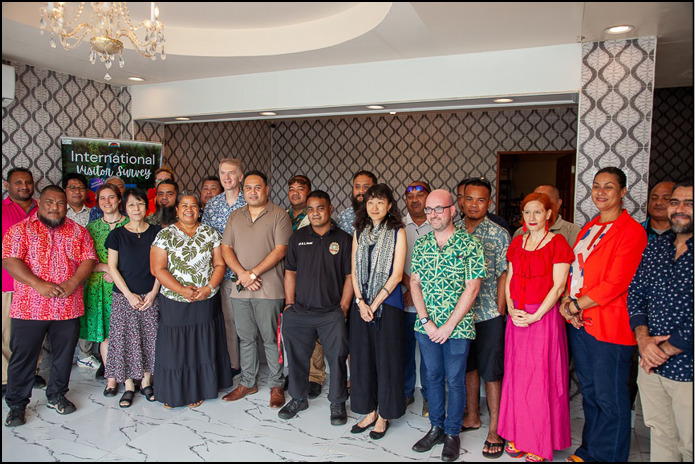
Representatives of FSM national and state governments, diplomatic missions, United Nations and regional agencies, and other partners gathered in Pohnpei Friday morning for a meeting of the FSM Joint Risk Management Network focused on drought preparedness and response.
Landon Aydlett of the National Weather Service office in Guam told participants joining the meeting in person and by video conference that El Niño continues to strengthen across the Pacific, with peak conditions expected around November, December, and January.
“The drought is coming soon, but not quite yet,” Aydlett said.
He said the rainfall now being experienced across much of the FSM is consistent with the onset year of an El Niño event. The onset year, in this case 2026, typically brings wetter conditions and greater tropical cyclone activity. The offset year, 2027, tends to be considerably drier.
“We’re in the wet phase right now. That dry phase is around the corner,” he said.
Aydlett said wet periods are expected to become shorter and less frequent during the coming months, while dry periods become longer and more frequent. The 2027 dry season is likely to begin earlier than normal and last longer, creating the potential for widespread drought across much of the FSM.
At the same time, the region is not yet finished with its tropical cyclone threat.
Aydlett said heightened tropical cyclone activity could continue through the remainder of 2026 and possibly into early 2027. Historically, El Niño years have brought late-season tropical cyclone activity to parts of the FSM, with storm tracks tending to move farther south toward the region later in the year.
That creates the possibility that emergency managers could find themselves preparing for two hazards at once.
“Are we ready to be responding to two major hazards at the same time?” Aydlett asked, noting that a tropical cyclone threat could emerge while drought conditions are developing or already underway.
He cautioned that El Niño does not guarantee any particular weather outcome. Strong El Niño conditions instead increase the likelihood of certain patterns, including heightened tropical cyclone activity followed by significant and widespread drought.
Rainfall is currently abundant across most of Micronesia, Aydlett said, although some locations are already showing signs of dryness. As the year progresses, however, heavier rainfall events are expected to become shorter and less frequent. Rainfall totals could begin falling below normal during October, November, and December, followed by the possibility of very low rainfall during the first months of 2027.
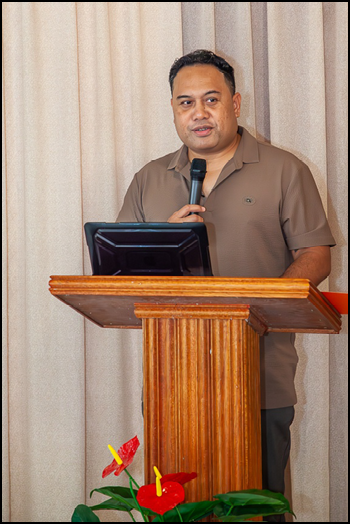
A representative of the Pohnpei National Weather Service office followed Aydlett’s regional presentation with a review of recent rainfall measurements for Pohnpei.
The figures compared rainfall during 2026 with normal rainfall based on data from 1991 through 2020. The presenter said rainfall has generally been above normal, with June standing out as a month with a deficit of approximately six inches. Other recent months have produced rainfall surpluses.
Those figures reinforced Aydlett’s warning that current wet conditions should not be interpreted as evidence that drought preparations are unnecessary. The Pohnpei presenter said the numbers are expected to begin moving below normal as rainfall becomes less frequent toward the end of the year.
Aydlett pointed to the strong 1997-1998 El Niño as an example of how quickly conditions can change. Pohnpei experienced above-normal rainfall during the onset year of 1997 before rainfall dropped below normal in November and December. January through May 1998 then brought very dry conditions.
Water availability is only one of the concerns associated with a prolonged drought.
Aydlett warned that even a relatively short dry period can rapidly dry vegetation and increase wildfire danger. He asked participants to consider whether Pohnpei has sufficient equipment, water, and personnel to respond if house fires in Kolonia and grass or wildfires elsewhere on the island occur at the same time.
“We can see one of our biggest wildfire years in over a decade,” he said.
Agriculture, livestock, and conditions on the FSM’s outer islands are also among the concerns emergency planners will need to consider.
Aydlett encouraged agencies to plan not simply for drought as a general concept but for what would happen at specific intervals if rainfall stopped.
“If the rain stops today, what are our problems and vulnerabilities in three days of no rain or five days?” he asked. “What if it’s ten days without rainfall?”
He urged planners to extend that exercise to two weeks or a month without significant rainfall and identify which communities would become vulnerable, what resources would be needed, and when particular response measures would have to begin.
The Secretary of the FSM Department of Environment, Climate, and Emergency Management opened Friday’s meeting by emphasizing coordination and early preparation among national and state governments and development partners.
Secretary Yatilman said the meeting was intended to provide updated weather and El Niño information while allowing state Disaster Coordination Offices and partner agencies to report on preparedness activities, available resources, challenges, and areas where additional support may be required.
The Secretary also referred to the FSM National Drought Preparedness and Response Plan, describing it as the country’s first comprehensive national framework for drought risk management. The project received funding support from the Government of Japan.
“The success of our preparedness effort depends on all of us working together,” the Secretary told participants, calling for agencies and partners to share information, coordinate activities, reduce duplication, and identify actions that can be taken before drought conditions become severe.
The Pohnpei Disaster Coordination Office reported that its current work includes raising public awareness from the state level down through municipalities and communities and coordinating with United Nations partners. Plans discussed during the meeting also included preparations for water distribution to outer islands if drought conditions require it, along with water storage and catchment-related assistance.
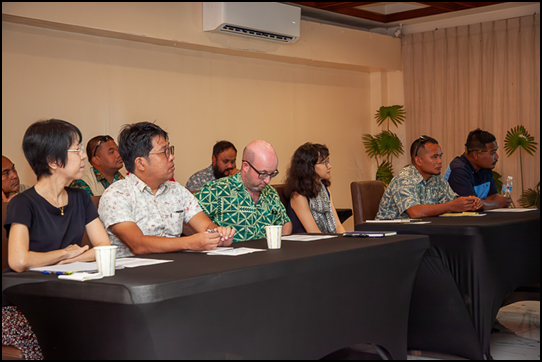
Pohnpei officials later provided additional information about preparations underway in the state, including plans to purchase desalination units. Representatives of Chuuk, Kosrae, and Yap also said their states were working on similar plans to purchase desalination units as part of their preparations for the expected drought.
Representatives of the Disaster Coordination Offices of all four FSM states attended the meeting, along with members of the diplomatic corps representing Japan, the United States, and Australia. UNICEF, the United Nations, the Pacific Community, and other international partners were also represented, either in person or remotely.
The broader purpose of the meeting was to compare preparations already underway, identify remaining vulnerabilities and resources, and determine what additional steps should be taken before rainfall begins to decline.
Aydlett said the FSM and its partners currently have an opportunity to prepare while water remains relatively plentiful.
“The drought is not here yet, but it is coming,” he said. “And we do have to plan for it and be ready to respond to it before things get into a dire situation because drought can be life and death, especially for a lot of our outer islands.”
Leave a Reply