
September 23, 2026
Palikir, Pohnpei — President Wesley W. Simina became the first sitting FSM President to address the Western and Central Pacific Fisheries Commission’s Technical and Compliance Committee when he spoke at the opening of its 22nd regular session in Palikir on September 23.
Simina called for practical support to help countries implement regional fisheries rules, telling delegates that compliance efforts should combine accountability with cooperation. His participation drew appreciation from WCPFC Chair Dr. Josie Tamate, who said his presence demonstrated the importance of tuna fisheries to the FSM’s development and the wider Pacific region.
The committee’s September 23–29 meeting brought together delegates, both in person and remotely, to examine implementation of the Commission’s fisheries measures and prepare recommendations for its consideration.
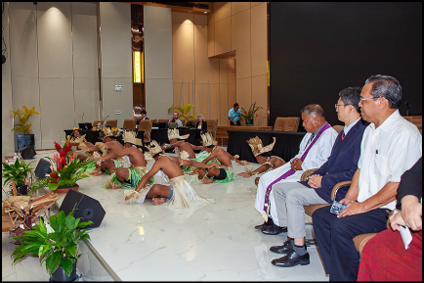
The opening ceremony included a traditional war dance by the Mwokillese Dancers midway through the program, following Simina’s address and before Tamate’s remarks. Tamate thanked the dancers for sharing their culture with participants and acknowledged those who had prepared the venue and organized the meeting.
Acting Senior Pastor Patrick J. Abraham of Pehleng Church delivered the opening prayer, and Shawn Walter served as master of ceremonies. TCC Chair Ilkang Na gave the opening remarks, followed by Simina, the dance performance, Tamate, and WCPFC Executive Director Rhea Moss-Christian.
In his address, Simina urged delegates to consider the difficulties countries face in meeting fisheries requirements and to find solutions together.
He said the committee should serve as a forum where partners help one another comply, while maintaining respect for agreed rules and accountability. Its discussions, he said, should produce practical improvements that members can take home and implement.
The President connected the committee’s technical responsibilities to Pacific people who depend on fisheries for food, employment, and national income. He welcomed scientific assessments indicating that the region’s principal tuna stocks remain healthy but cautioned that their condition requires continued effort to protect what members have achieved.
Simina said growing requirements for data, monitoring, reporting, electronic systems, and verification place substantial demands on administrations, particularly in small island developing states with limited staff, finances, and technical resources.
He called for systems that remain practical, understandable, and efficient, supported by knowledge sharing, cooperation, and capacity building. Stronger national capacity, he said, benefits the entire regional fisheries management system because better information and implementation in one country strengthen the collective effort.
He also described science, management, monitoring, compliance, and reliable data as connected parts of responsible fisheries management. Those systems must adapt to new challenges, including climate change and its potential effects on the distribution and availability of highly migratory fish.
For the FSM, Simina said, the ocean’s significance extends beyond its economic value.
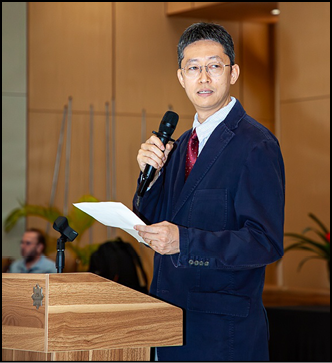
“Our people have lived with and depended upon the Pacific Ocean for generations,” he said. “It provides food, livelihoods and economic opportunities, but it also carries our cultures, traditions and identities.”
He encouraged continued cooperation with regional organizations, including the Pacific Community, the Pacific Islands Forum Fisheries Agency, and the Parties to the Nauru Agreement, drawing on their expertise while respecting their respective mandates.
Moss-Christian said governments’ investments in monitoring, control, and surveillance over the past two decades have strengthened the region’s ability to monitor and manage fishing activities. Increased capacity has provided more and better information to support data collection and compliance.
She said partnerships sustain that work through shared assets, data, information, and joint surveillance operations. Those efforts require continued investment and commitment as fisheries management faces growing demands.
“But biological sustainability is no longer the whole story,” Moss-Christian said. “New market requirements are created regularly, and markets are demanding stronger verification now.”
She called for stronger independent monitoring through increased data collection and availability. Changes in market access, she said, also raise questions about who owns and manages the fisheries value chain and require the Commission to adapt to shifting priorities and expanding regional capacities.
Moss-Christian welcomed delegates to the home of WCPFC headquarters and thanked the FSM government for making the new convention facility available. She also acknowledged the College of Micronesia’s support and the facilities that had served the committee over the preceding 20 years.
She thanked the FSM National Oceanic Resources Management Authority for its continuing role in organizing the annual meeting in Pohnpei and pledged the Secretariat’s support for Na as he began his chairmanship.
Na thanked the FSM for its hospitality and acknowledged the work of members, the Secretariat, and observers in developing the Commission’s monitoring and compliance arrangements.
At his first TCC meeting as chair, Na compared taking on the position to learning to swim, expressing confidence in the Secretariat’s support and the shared efforts of delegates. He said the committee faced a long agenda and pledged to work with participants to complete its work.
Tamate acknowledged Simina’s unprecedented participation and thanked the FSM for its continuing support as host of the WCPFC Secretariat.
She praised members’ efforts to maintain healthy tuna stocks while recognizing that the Commission continues to face challenges requiring collective attention.
Tamate encouraged delegates to scrutinize issues needing action, particularly conservation and management measures under review and recommendations from working groups that meet between annual sessions. She said the Commission’s workload continues to expand and that steady progress remains necessary, even when work must advance gradually.
Reflecting on her three years as Commission chair, Tamate thanked the committee for its contributions to the Commission’s decisions. She said she looked forward to receiving its report and recommendations at the WCPFC’s 23rd regular session in Port Vila.
Simina reaffirmed the FSM’s support for the Commission and urged delegates to remember their shared responsibility to keep the region’s tuna resources healthy, sustainable, and available for future generations.
Read or download the complete issue of The Kaselehlie Press

Leave a Reply