
September 10, 2026
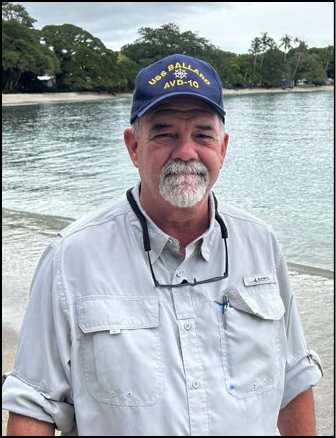
Pohnpei, FSM — Military historian and editor Jeff Ballard came to Pohnpei this week carrying stories of World War II, but the message he hopes audiences take away from his presentations extends well beyond battles, ships, and military strategy.
Ballard, Editor-in-Chief of Military History Chronicles, is visiting the FSM as part of a U.S. Department of State Bureau of Educational and Cultural Affairs program that is taking him to four Pacific countries for lectures, presentations, and roundtable discussions about World War II in the Pacific.
The State Department approached Ballard in April about participating in the program, drawing on a subject that has fascinated him since childhood. His Pacific itinerary includes the FSM as well as Papua New Guinea, Solomon Islands, and Vanuatu.
In Pohnpei, however, his presentations have not simply recounted military campaigns. Ballard said he has tried to use World War II as a way of exploring social history and the experiences of ordinary people caught up in extraordinary circumstances.
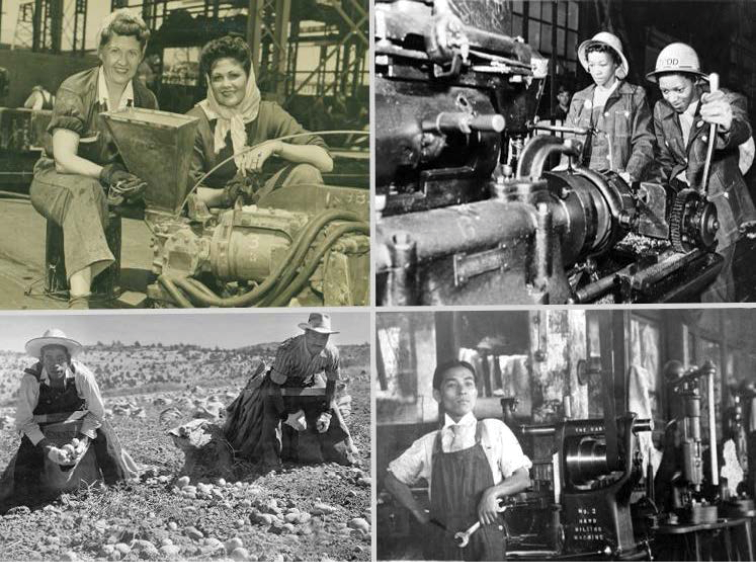
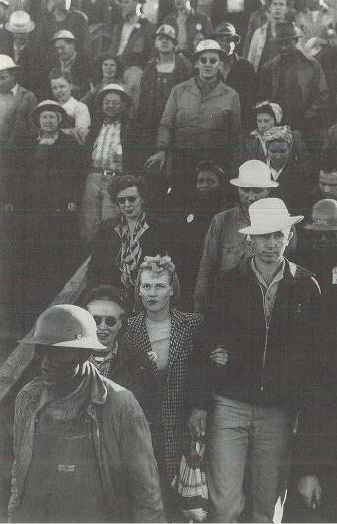
One of his presentations examines the enormous changes in American society brought about by the war, including the movement of workers from agricultural areas into industrial centers and the entry of women into jobs traditionally held by men.
To make that history more immediate for young audiences, Ballard created a fictional young woman named Susan Martin, who leaves Pascagoula, Mississippi, in 1943 for a shipyard job in Richmond, California. She is in her early 20s, has never traveled far from home, does not know how to weld or rivet, and must make a five-day, 2,700-mile train journey alone before taking on work she has never done.
The point, Ballard said, was not simply to explain America’s wartime industrial mobilization.
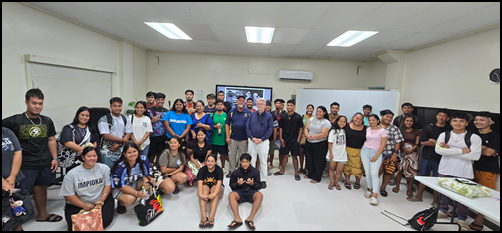
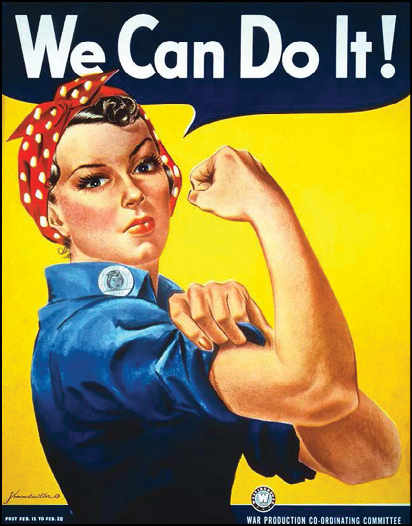
“I hope that if anybody, the lesson that anybody received from those things yesterday, was we can all do much, much, much more than we think we can do,” he said.
At some point, he said, people are likely to find themselves asked to do something they do not know how to do, have not been trained to do, or may not particularly want to do, whether in service to their community or their family.
Ballard gave presentations during his Pohnpei visit to students at several schools, including Pohnpei Island Central School, Our Lady of Mercy Catholic High School, and the College of Micronesia-FSM, as well as an audience at the U.S. Embassy. He said attendance at his presentations generally exceeded what he had been told to expect and singled out the students at Our Lady of Mercy as particularly attentive and engaged.
Another presentation grew from Ballard’s oral-history work with U.S. Navy veteran Robert Nate, who recently celebrated his 102nd birthday. Nate served as a motor machinist’s mate aboard a small patrol craft, and his wartime experience was characterized less by dramatic combat than by the long periods of routine and monotony that were also part of military service.
Ballard said his conversations with Nate led to several related research projects. He published Nate’s oral history and submitted it to the Library of Congress, while also pursuing archival research arising from the veteran’s story.
That approach reflects Ballard’s broader view of military history. Although battles and military operations have fascinated him for most of his life, he said his work is not intended to glorify warfare.
“I don’t think that the work that I do is in any way meant to venerate war,” Ballard said.
He cited the words of Dwight D. Eisenhower:
“War is mankind’s most tragic and stupid folly; to seek or advise its deliberate provocation is a black crime against all men. Though you follow the trade of the warrior, you do so in the spirit of Washington—not of Genghis Khan.”
Ballard said he hopes his own work helps people understand the social effects of war, including aspects of history that can disappear when wartime generations are viewed only through heroic narratives. He pointed to the racial and gender discrimination that existed alongside the accomplishments commonly associated with America’s World War II generation.
Ballard’s fascination with the subject began when he was 11, when his father gave him one volume of Rear Admiral Samuel Eliot Morison’s 15-volume history of U.S. naval operations during World War II. By age 14, Ballard had read the entire series, but repeatedly returned to the volume dealing with Guadalcanal.
He became so absorbed in the campaign that he drew maps and used National Geographic maps and tissue paper in attempts to calculate the locations of shipwrecks described in the histories.
Guadalcanal remained a particular interest into adulthood. Ballard first traveled there in 2023 after a planned earlier trip was delayed by the COVID-19 pandemic. He subsequently returned and became involved in battlefield tours and historical work in the Solomon Islands.
His connection to maritime exploration is also a family one. His uncle is oceanographer and explorer Dr. Robert Ballard, best known for locating the wreck of the Titanic and associated with the exploration vessel Nautilus. Jeff Ballard acknowledged that the family relationship has provided him with opportunities for which he is grateful.
His work with the Ocean Exploration Trust eventually included running a battlefield tour program connected with Nautilus operations in the Solomon Islands. Recent exploration there located previously unidentified wreckage, including a Japanese destroyer and the long-missing bow section of the USS New Orleans, which was blown off during fighting in the Solomons but whose remaining hull survived the war.
Ballard also has formal academic training in the field. He earned a master’s degree in American Military History from American Military University and became involved with the university’s history journal while a student.
After one of his papers was published, he began working with the journal as a copywriter and editor and eventually became responsible for continuing publication during the COVID-19 pandemic. With historians suddenly having considerably more time available for research and writing, he recalled receiving a flood of material, allowing the journal to increase its publication schedule from two issues a year to four.
Although his research has ranged more broadly across American military history, the Pacific remains a particular interest. His graduate research concentrated on naval warfare in the Solomon Islands, and he has now spent several summers traveling there and studying battlefields and other historically and culturally significant sites.
For Ballard, Guadalcanal was more than another battle in a long war. While Midway is commonly described as the turning point of the Pacific War, Ballard said he is among historians who regard Guadalcanal as the more significant turning point because it represented the first Allied offensive to retake territory occupied by Japan.
The Japanese airfield under construction there posed a threat to communications between the United States and Australia, he said, making the campaign strategically necessary.
The FSM has its own extensive World War II history, although the islands experienced the war differently from Guadalcanal. Ballard noted that U.S. forces did not undertake a ground invasion of Pohnpei or Chuuk. Instead, Japanese positions were isolated and subjected to air and naval attacks as Allied forces advanced elsewhere across the Pacific.
More than eight decades later, Ballard’s visit comes as living memory of the war is rapidly disappearing throughout the Pacific. His presentations combine military history, oral history, archival research, and the experiences of people whose lives were transformed by events far larger than themselves.
For the students hearing those stories in Pohnpei, Ballard said he hopes at least one lesson survives after the names, dates, and battles fade from memory: people are often capable of considerably more than they believe when circumstances require them to step into unfamiliar roles.
Leave a Reply